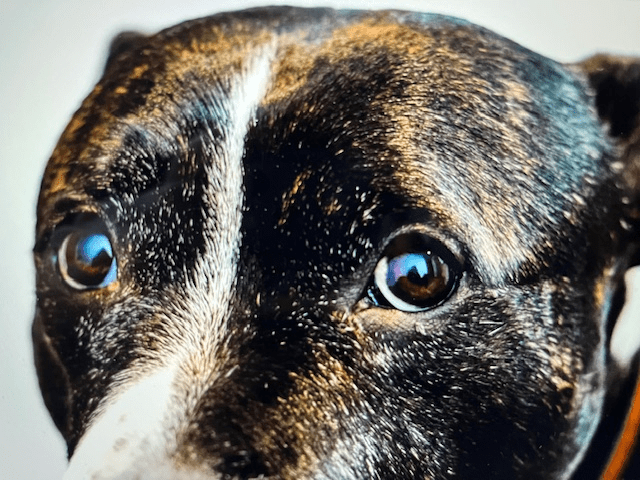
While I suppose it makes sense that we each see the world through our own eyes and in the light of our own experiences, a rose by any other name should still smell as sweet… shouldn’t it? And given the long line of common ancestors it needn’t come as a surprise that our brains might also still share many other commonalities with the animals that surround us. It is likely only our human conceits, and overweening pride which prevents us from seeing the obvious; I refer, of course, to neurodivergence in dogs.
Depending on where your seat is on the Bell Curve, everything is relative. If you have difficulty in crowds, or stand in a quiet corner at parties (if you’re even invited) it might make sense that your dog would acquire some of your idiosyncrasies along the way.
When I was a child, my dog was a quiet one; in fact, he liked nothing better than for me to visit him in his kennel outside the back door when my parents had their friends over for a couple of tables of Bridge. Cards are noisy games: a lot of laughing followed by malevolent stares from the wife if her husband bids incorrectly. It was easy for me to sneak by them.
Boots -that was the dog’s name, for some reason- normally slept in our house except when it was full of guests; I suspect he thought he was being punished when they arrived; pandemonium, confusion, and noisy guffaws he learned, were beyond the Pale for him.
Loud noises usually made him scratch at the kitchen door to be let out and tethered to the chain that attached him to his little house -a devil’s bargain because the chain was also a punishment for him, I suspect. I was small in those days, and the two of us could snuggle quite comfortably in the dog house in the back yard my father had built.
In those early years of my childhood, I’m pretty sure none of us had ever heard of neurodiversity, or autism -although the Swiss psychiatrist Eugen Bleuler apparently coined the term autism in 1911 to describe a symptom of schizophrenia, which he characterized as a withdrawal into a private world of one’s own. Post war Winnipeg, however, had other things to attract our attention, like black and white TVs, shiny new refrigerators, and pastel-coloured cars to preoccupy adults between Bridge games.
The term Neurodiversity, was introduced by the sociologist Judy Singer somewhere around 1998 to describe anyone whose brain functioned differently from dominant societal norms. As far as I can remember though, the idea of autism, or neurodivergence had not yet penetrated the bowels of the Reader’s Digest magazines which, in the 1950ies, lived in innocence on the little rack in our bathroom. It was a simpler time, eh?
But the seasons shuffled past heedless of my attention so it is a different century in which I find myself now retired. And, the reading material I depend on for my bathroom is largely poetry and even more thought-provoking; it is also designed to be portable from room to room to avoid embarrassing stares from guests during their rare visitations.
At any rate, the idea of neurodivergence in dogs had never really occurred to me until I saw the dog portrayed as the frontispiece of an essay in an app on my phone; I thought I’d use it for my essay to pay homage to the article. Although admittedly a different breed, it reminded me of my childhood friend Boots -something about its eyes, I suppose.[i] To say that I was curious, understates it considerably. ‘Animals cannot directly tell us how they perceive the world, or answer typical diagnostic questions. We can only ever describe animal behaviour through the lens of our own understanding… However, research indicates that a range of species including dogs, rats, mice and non-human primates can show genetic and behavioural signs of neurodivergence. For instance, structural differences in genes known to be associated with hypersocial behaviour have been found in dogs.’
‘Impulsive behaviour in dogs is also linked to low levels of the neurotransmitters serotonin and dopamine. Imbalances and difficulty in regulating these neurotransmitters may also be associated with ADHD in people, and is often characterised by impulsivity. This also raises the interesting possibility that by breeding animals to live alongside us, we selected animals with behaviour similar to what is reported by neurodiverse people.’
‘Some beagle dogs have a mutation in a gene called Shank3, which is linked with autism in humans and often characterised by difficulties in social interactions. Beagles with the Shank3 mutation also exhibit low desire to interact with people.’ Perhaps I have that gene as well, because I seldom have much desire to interact with beagles… I have never been tested, however. And anyway, a lot of those beagles end up in rescue shelters I would imagine, eh? I’ve learned to be careful.
Too careful, perhaps; I live alone now but although I share my house with mice and sundry other shy things that leave gifts for me on the counters I have to wipe each morning after my shower, they are not enough. I long for something I can name and take on walks with me through the nearby woods; I yearn for something which doesn’t hide when they hear me stirring from my bed; something clever enough to avoid the peanut butter traps in the kitchen; something whose eyes do not have to peek at me from me under the fridge.
I suppose that’s asking a lot from a relationship, though -it didn’t work with my wife; she tired of wandering through the forest in the rain with me. But we’re all different I guess; it’s why octogenarianism comes in different flavours. So does loneliness.
I need something to fill my days, not my bed anymore. I need a companion, not an argument; a friend, not a competitor. Those days are over for me, I think. I suppose what I am hoping for is neuroconvergence in a friend; someone who is happy to follow my lead, or in case they are on a leash, happy to lead me.
Things must change if you want to age-in-place however; things have to be acceptable. Dogs are like that: they’re as happy to lead as well as follow; to teach as well as listen. And in a warm summer meadow, I know I’d be quite happy to turn around three times before lying down in the grass beside my dog…
[i] https://theconversation.com/autistic-dogs-neurodiversity-in-our-pets-and-what-it-might-mean-for-us-265888
- March 2026
- February 2026
- January 2026
- December 2025
- November 2025
- October 2025
- September 2025
- August 2025
- July 2025
- June 2025
- May 2025
- April 2025
- March 2025
- February 2025
- January 2025
- December 2024
- November 2024
- October 2024
- September 2024
- August 2024
- July 2024
- June 2024
- May 2024
- April 2024
- March 2024
- February 2024
- January 2024
- December 2023
- November 2023
- October 2023
- September 2023
- August 2023
- July 2023
- June 2023
- May 2023
- April 2023
- March 2023
- February 2023
- January 2023
- December 2022
- November 2022
- October 2022
- September 2022
- August 2022
- July 2022
- June 2022
- May 2022
- April 2022
- March 2022
- February 2022
- January 2022
- December 2021
- November 2021
- October 2021
- September 2021
- August 2021
- July 2021
- June 2021
- May 2021
- April 2021
- March 2021
- February 2021
- January 2021
- December 2020
- November 2020
- October 2020
- September 2020
- August 2020
- July 2020
- June 2020
- May 2020
- April 2020
- March 2020
- February 2020
- January 2020
- December 2019
- November 2019
- October 2019
- September 2019
- August 2019
- July 2019
- June 2019
- May 2019
- April 2019
- March 2019
- February 2019
- January 2019
- December 2018
- November 2018
- October 2018
- September 2018
- August 2018
- July 2018
- June 2018
- May 2018
- April 2018
- March 2018
- February 2018
- January 2018
- December 2017
- November 2017
- October 2017
- September 2017
- August 2017
- July 2017
- June 2017
- May 2017
- April 2017
- March 2017
- February 2017
- January 2017
- December 2016
- November 2016
- October 2016
- September 2016
- August 2016
- July 2016
- June 2016
- May 2016
- April 2016
- March 2016
- February 2016
- January 2016
 Musings on Retirement