When I was a little child, I wondered if all living things could feel pain; dogs and cats were easy: I could just tell. But what about the other living things around me: insects, fish, snakes, worms… everything that moved on its own accord? I’ve written about this at length before (of course) [i] but the subject continues to intrigue me -whether out of maturity, or conscience I’m not sure. But the previous essay was an attempt to disentangle sentience from pain. I’m now trying to unwind pain from sentience, I guess…
After all, if something is alive, it probably shares similar goals with us: a need for food, shelter, and reproduction -although I obviously didn’t reason in those terms as a child. Even if they could ‘think’ would their pain be the same as ours? Their lives are different from us; they play by different rules; they have different ways of being in the world. And anyway, how would we know if they actual feel pain? Or, perhaps more brutally, why should we care…?
Now that I am an adult with promises to keep and miles to go before I sleep as the poet Robert Frost put it, I think of things differently: Age often has that effect I suppose. I mean I can tell if an insect, say, seems to behave differently if I’ve inadvertently stepped on one of its 6 legs -but would that constitute pain or merely an attempt to escape further injury? And what about a freshly caught fish, slapping about in the bottom of the boat in what seems like a desperate need to escape: a desperate need to get back into the water so its gills can breathe again? Or a bee I’ve slapped after it mistakenly landed on my skin no doubt just looking for food, or whatever; it just seems stunned, but is that reflexive, or purposive…?
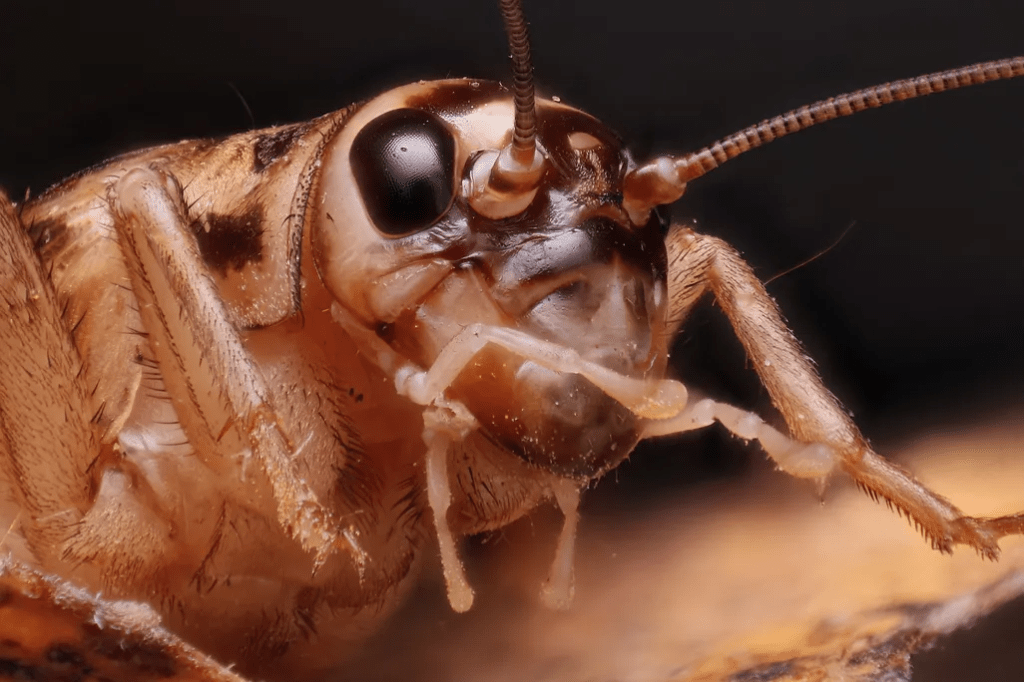
I suppose the reason I’m asking about trans-species pain is our burgeoning need for finding food that has less severe environmental consequences than what we have depended on so far -like crickets, a good source of proteins, for example. The infliction of pain, or even the hidden consequences of our actions, are usually ignored, or discounted in our quest. But, as I’ve covered in other essays, pain is difficult to quantify, or even identify because it is subjective; I can never know what it would be like to be that creature. I can only infer pain from its behaviour, liken what I see to how I might react to whatever I have inflicted on it.
I know, I know: I have to be careful about anthropomorphizing things, applying our human lens to anything with agency. But empathy -or perhaps more accurately sympathy- is hard(or soft) wired into us; we are inherently relationists -behavioralists, I think. To understand whether creatures can feel pain, scientists often look to their behavior. They specifically search for signs of “flexible self-protection,” such as grooming or cradling a certain area of the body. Over time, research has shown that using those criteria, numerous nonhuman species, including invertebrates like crabs, octopuses, cockroaches and mosquitoes, seem to feel pain.[ii]
In a previous essay, I had in mind a friend who took pity on earthworms stranded on the sidewalk in the heat and whenever possible she helped them get over onto the dirt. Sympathy for a fellow traveller, or whim…? I suppose it doesn’t really matter: she took pity on hot stranded worms because of an experience with a severe sunburn she herself suffered when she was old enough to have known better.
Jilian had been visiting Florida for Spring Break with some friends from University and as usual a lot of alcohol had been involved. Her friends had all come as couples, and by noon she was becoming uncomfortably lonely watching them snuggling and giggling, then disappearing into their rooms for what seemed like unnecessarily prolonged interludes.
She was still hung over but decided to inform her friends that she was going for a walk along the beach in her bathing suit to go for a swim and then find some space to be by herself. Unfortunately, even in the morning, both solitude and shade were in short supply on the beach. Still, after a long stroll, she managed to find a seemingly abandoned beach umbrella and curled up under it and promptly fell asleep.
The company that rented the umbrella only came out to claim it in the evening and found her shivering, badly sunburned and confused, still lying under what shade remained. They summoned a paramedic who, judging the severity of her burn, took her to the Emergency department of the closest hospital. They only kept her there for observation and treatment for a few hours until her friends could come and take her back to their hotel. But, before they arrived the Emerg docs decided to use her for a teaching moment and a two junior medical students were led in to see why frequent application of sunscreen was so important.
“Hi,” one of them said. “My name’s Cecelia. We’re both medical students,” she explained timidly and in a small voice. “We just wanted to ask you about what happened. Why didn’t you move into the shade, or maybe leave the beach? It was a really hot one today…” she asked as she stared at Jilian.
“I fell asleep,” Jilian answered, uneasy about the criticism.
Cecelia shook her head unbelievingly. “I would have thought that somebody would have noticed you and helped…”
The other young student standing beside her shrugged. “None of their business, I guess…”
“I still don’t understand why anybody wouldn’t try to help!” Cecelia, said, taken aback at the thought. “I suppose that’s why we’re in medicine though, eh Judy?”
Judy just shrugged, obviously embarrassed. “And why they’re not Cessy…”
“God, I hope I never get like that,” Cecelia said, sounding shocked.
Jilian smiled at the group, although it hurt her face. “Errare humanum est, perseverare diabolicum, as Seneca said… I think I’ve learned a lesson at least…”
“Huh?” -Judy this time.
“It means to err is human, but to persist is diabolical,” Cessy explained to Judy, and then turned to Jilian with a smile. “I did classics in my undergrad… Even we classics scholars sometimes go into Medicine to justify our otherwise useless knowledge. It proves that nothing is ever wasted…”
With some difficulty Jilian nodded her head. “Neither are stupid mistakes… I think I’ve actually learned something today: compassion.” She risked another painful smile and then glanced at Cecelia. Have you ever studied Shakespeare?”
Both of them nodded.
“Well, remember in his Merchant of Venice when Portia disguises herself as a lawyer and begs Shylock to show mercy to Antonio: ‘The quality of mercy is not strain’d. It droppeth as the gentle rain from heaven upon the place beneath. It is twice blest: It blesseth him that gives and him that takes.’ I know I’ll never forget that now…”
And, maybe fifty or so years later, neither will I…
[i] https://musingsonwomenshealth.com/2020/02/11/masters-of-their-fates/
[ii] https://www.smithsonianmag.com/smart-news/can-insects-feel-pain-new-research-suggests-that-crickets-do-180988752
- October 2026
- September 2026
- August 2026
- July 2026
- June 2026
- May 2026
- April 2026
- March 2026
- February 2026
- January 2026
- December 2025
- November 2025
- October 2025
- September 2025
- August 2025
- July 2025
- June 2025
- May 2025
- April 2025
- March 2025
- February 2025
- January 2025
- December 2024
- November 2024
- October 2024
- September 2024
- August 2024
- July 2024
- June 2024
- May 2024
- April 2024
- March 2024
- February 2024
- January 2024
- December 2023
- November 2023
- October 2023
- September 2023
- August 2023
- July 2023
- June 2023
- May 2023
- April 2023
- March 2023
- February 2023
- January 2023
- December 2022
- November 2022
- October 2022
- September 2022
- August 2022
- July 2022
- June 2022
- May 2022
- April 2022
- March 2022
- February 2022
- January 2022
- December 2021
- November 2021
- October 2021
- September 2021
- August 2021
- July 2021
- June 2021
- May 2021
- April 2021
- March 2021
- February 2021
- January 2021
- December 2020
- November 2020
- October 2020
- September 2020
- August 2020
- July 2020
- June 2020
- May 2020
- April 2020
- March 2020
- February 2020
- January 2020
- December 2019
- November 2019
- October 2019
- September 2019
- August 2019
- July 2019
- June 2019
- May 2019
- April 2019
- March 2019
- February 2019
- January 2019
- December 2018
- November 2018
- October 2018
- September 2018
- August 2018
- July 2018
- June 2018
- May 2018
- April 2018
- March 2018
- February 2018
- January 2018
- December 2017
- November 2017
- October 2017
- September 2017
- August 2017
- July 2017
- June 2017
- May 2017
- April 2017
- March 2017
- February 2017
- January 2017
- December 2016
- November 2016
- October 2016
- September 2016
- August 2016
- July 2016
- June 2016
- May 2016
- April 2016
- March 2016
- February 2016
- January 2016

